
Remembering Coleman Barks
A reading of his poem "The Center"

IN HONOR OF COLEMAN BARKS
April 23, 1937 Chattanooga, Tennessee – February 23, 2026 Athens, Georgia
Two nights ago, I received word from a friend, the photographer and artist Benjamin Rouse (whose photos grace this missive), that the poet Coleman Barks had died. I had the great privilege of spending time with Coleman in his home in Athens a few times over the past year or two. The rooms breathed with the life of the meaningful objects he’d collected, including his many books, some of which he’d sometimes chuck into the fire, the ones he didn’t care to read again, just to watch them flare and flame—words passing back into the unspeakable, back into the burning heart of mystery; they were better off there, surely.
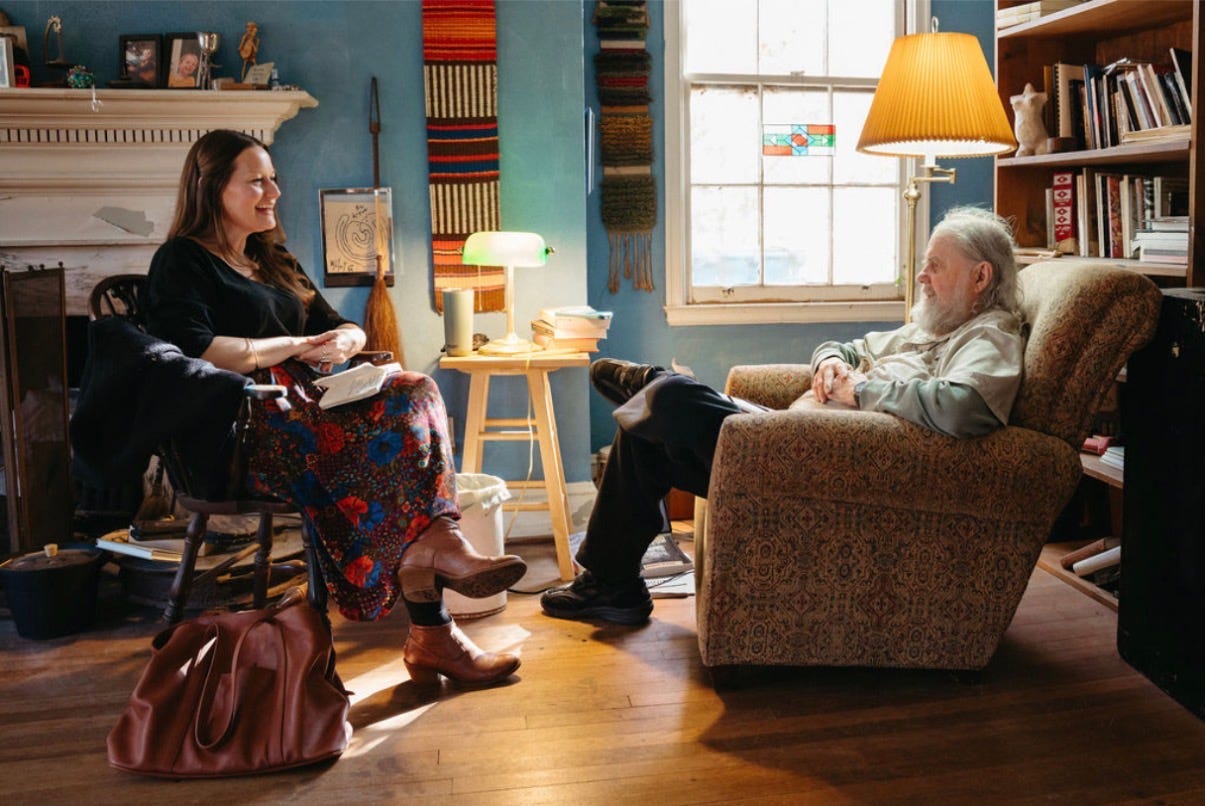
I was intending to write about his life, his work, his spirit. But more than writing, I stood in witness. His mind was fraying, interviews did not move from question to answer. I surrendered, realized they were a way of entering the stream. I abandoned my idea of an end-of-life profile and simply allowed myself to float in that current and be moved.
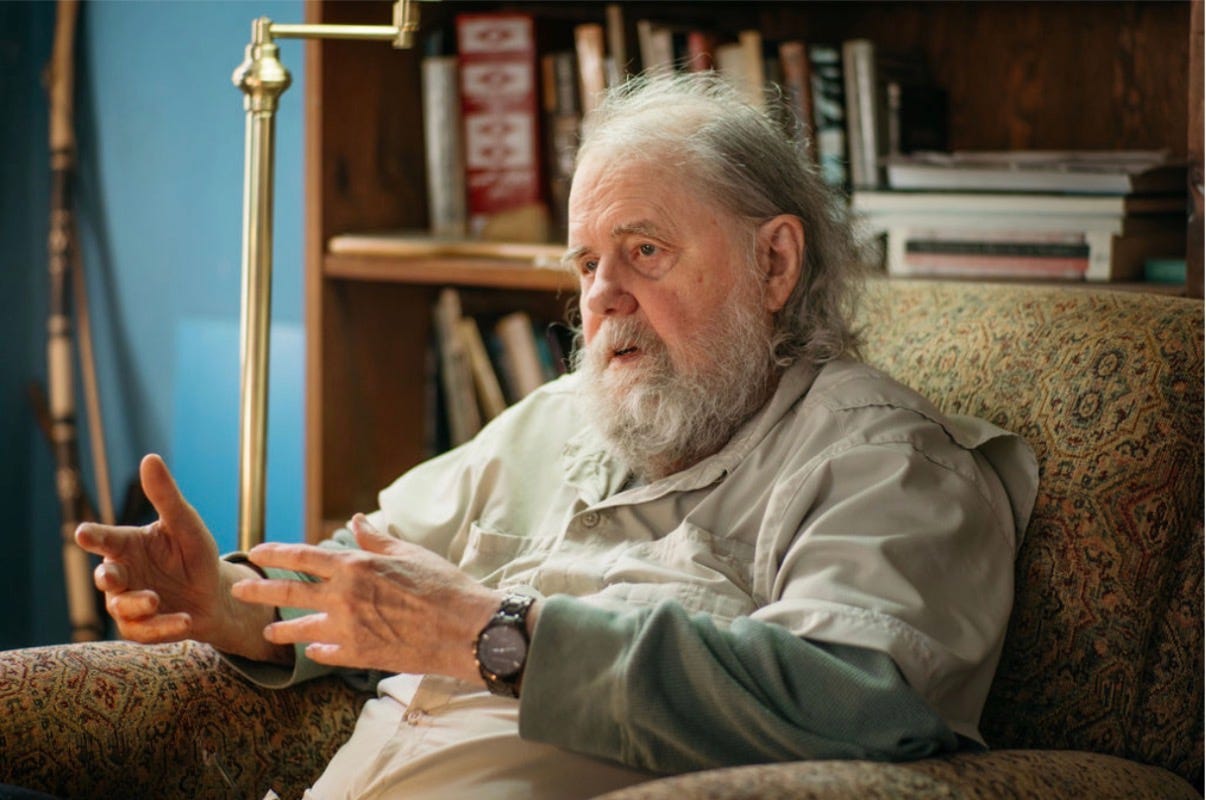
Not enough. But I am grateful nonetheless that I followed the call to the doorway of his great dreaming flashing mind and caught sight of the glimmers.
I expect that I will write more as time goes.
He was a fellow Tennessean, and, now, a fellow Athenian. He was a kindred. He was a guide, an inspiration.

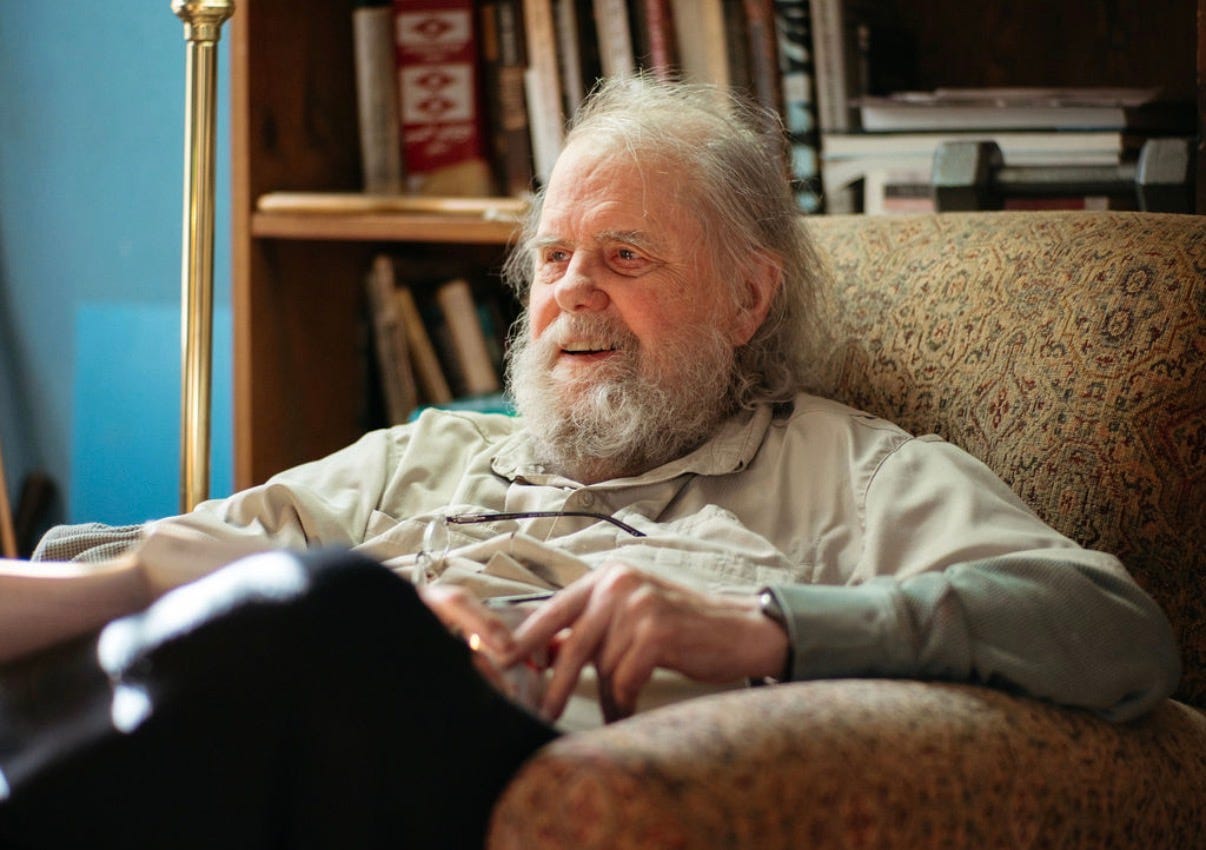
I’ve been reading his poems aloud at night these past two nights. Allowing them to come to life in me.
Here I’ve included my reading of his poem “The Center,” published in Winter Sky, his new and collected poems. It was a new one, written sometime between 2003-2008. In his poems, I see that Coleman was preparing for his death for a long time. He was courting the dark whirling afterlife—where Rumi still dances, where his Sufi teacher Bawa Muhaiyaddeen still teaches—with a kind of ecstasy that sharpened his joy for being alive.
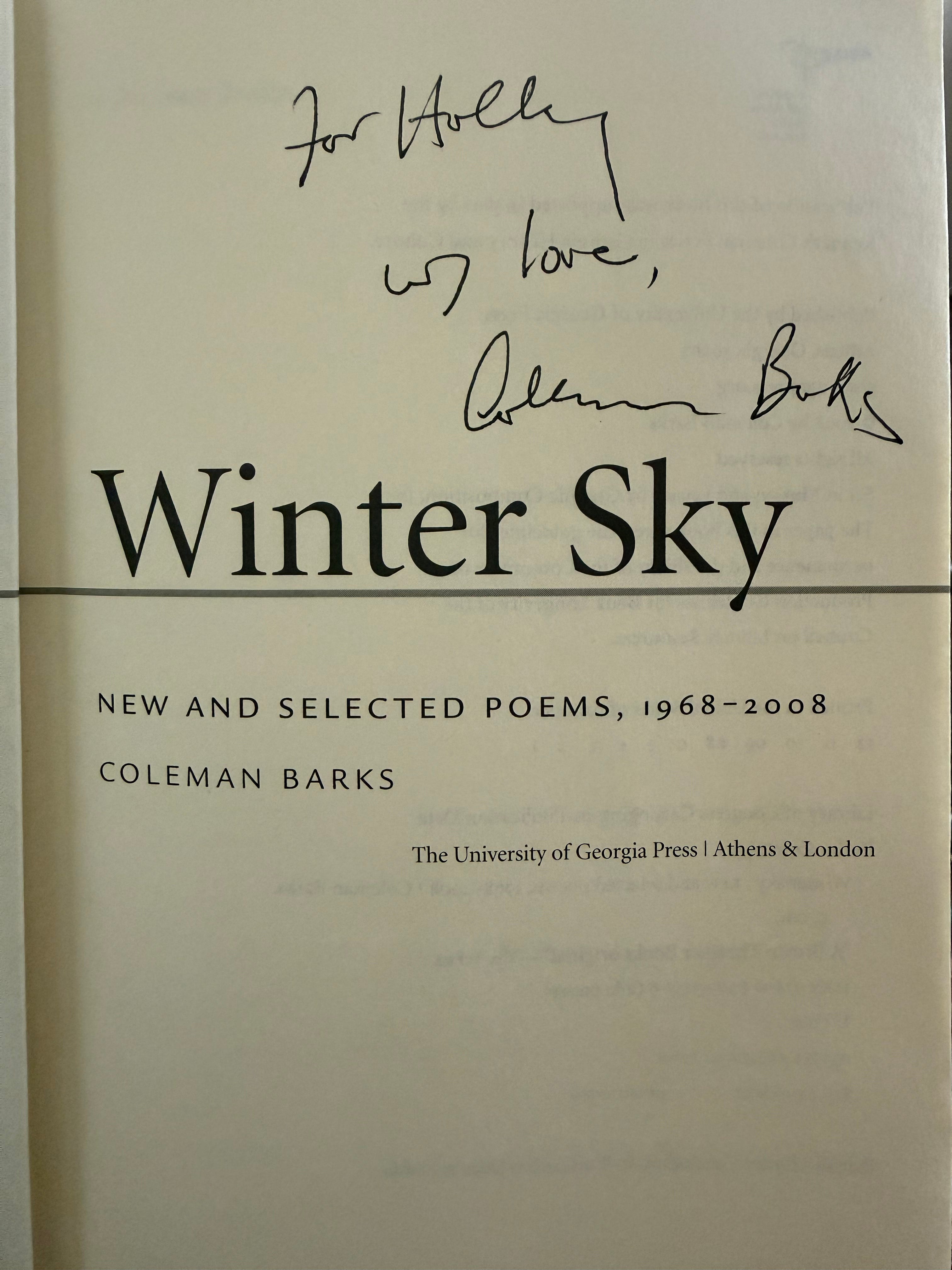
Mr. Barks lived & breathed the spirit of poetry—that is, poetry was a vessel for the spirit to move through him, a vessel to carry the waters of life, to bring those waters into his body, to share them with those in thirst around him.
With this vessel, he freely poured the great flowing spirit of Rumi, invited him to speak again in the modern day, alongside him.
Barks’ was a heart that bowed ever toward the Muses.
He was a kindred, someone who graced my life, though too briefly. As he crosses over the wild river into the land of endless dreams, I am lifting my prayers to him, holding his words and his silence in my heart.
With love,
Holly
+
Coleman’s full obituary:
Coleman Bryan Barks of Athens, GA passed peacefully at home on February 23, 2026 surrounded by loved ones. He was born on April 23, 1937 to Elizabeth Bryan and Herbert Bernard Barks. He grew up on the campus of Baylor School along the Tennessee River in Chattanooga, where his father was headmaster. He attended Baylor School and was a stellar athlete who excelled at soccer and tennis. He earned his BA at UNC Chapel Hill as the first out-of-state Morehead Scholar, and his MA at the University of California, Berkeley, returning to UNC for his doctorate. Barks joined the faculty of the University of Georgia English Department in 1967, where he taught literature and creative writing to thousands of students until his retirement as professor emeritus in 1997.
In 1976, Barks’ close friend, the poet Robert Bly, showed him some academic translations of Jalal al-Din Rumi, the thirteenth-century mystic Persian poet. Bly urged Barks to “release the poems from their cages.” Later, Barks became a student of the Sri Lankan Sufi mystic Bawa Muhaiyaddeen. Thus began his long and illustrious career translating Rumi, and producing dozens of volumes including The Essential Rumi, A Year with Rumi, and ultimately, the comprehensive Big Red Book. His translations have sold millions of copies and have been translated into many languages spanning 41 countries, inspiring readers worldwide.
For decades, Barks traveled the world, performing for audiences large and small, often with music and dance ensembles including the Paul Winter Consort and Zuleikha, the Storydancer. His translation of Rumi’s “The Guest House” can be enjoyed on Coldplay’s album “A Head Full of Dreams.”
In 2004, Barks received the Juliet Hollister Award for his work supporting interfaith understanding, and in 2006, the University of Tehran awarded Barks an honorary doctorate in recognition of his translations. In March 2005, the US State Department sent him to Afghanistan as the first visiting speaker there in 25 years. Rumi was the most-read poet in both countries at the time.
In 2010, Barks was interviewed by Bill Moyers as part of two Public Broadcasting Service series on poetry, propelling him to an ever-widening audience.
In addition to his Rumi translations, Barks was an acclaimed poet in his own right. Notable titles include The Juice, Tentmaking, and Winter Sky: New and Selected Poems. Much of his finest work – including notes on his process – is archived with the Hargrett Rare Book & Manuscript Library (https://sclfind.libs.uga.edu/catalog/ms4164) at the University of Georgia.
Barks was inducted into the Georgia Writers Hall of Fame in 2009. His many literary friends and heroes included Galway Kinnell, Donald Hall, Robert Bly, Annie Dillard, James Dickey, Naomi Shihab Nye, James Hillman, and Mary Oliver.
Barks lived in Athens, Georgia for most of his adult life. Although internationally acclaimed, he was always approachable at his favorite corner seat at The Manhattan Cafe, Jittery Joe’s, or the Five Points Waffle House, ready and willing to talk about poetry, politics, or the Georgia Bulldogs. Generous with friends and strangers alike, he enjoyed laughing, dinners, conversation, buck dancing and singing, with some partiality to shape-note hymns. He found particular inspiration and peace near rivers and creeks. Outside of the written word, he expressed himself creatively through stonework and painting. He was a devoted and playful grandfather, always instilling an appreciation for whimsy and art in his children and grandchildren. His work and life were infused with humor and joy.
Coleman Barks is survived by his brother, Herb Barks; sister, Elizabeth Barks Cox; his former wife Kittsu Greenwood, and their two sons, Benjamin and Cole (m. Kelley); his grandchildren Bryan (m. Chris Miller) Tucker, Keller, Woody, Henry, and Luna; and his longtime companion, Lisa Starr. Additionally, he leaves thousands of friends and fans around the world.
Thank you for this warm remembrance. His Rumi events were formative for many of us….
He was legendary.